

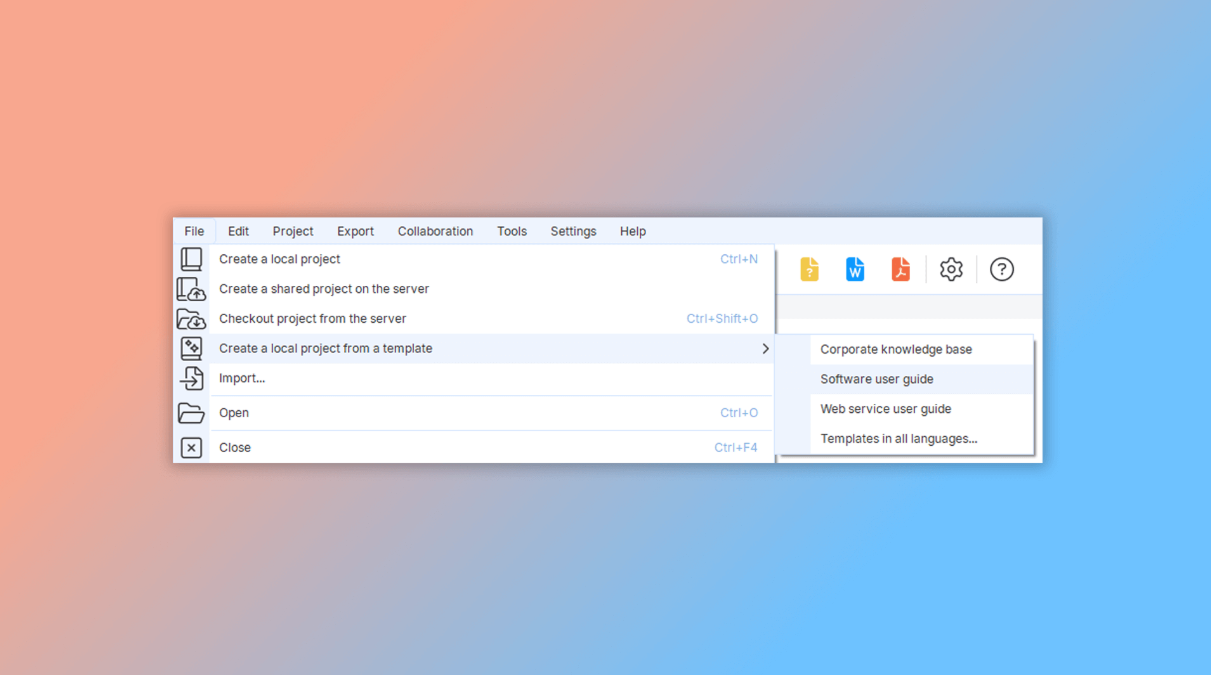
A user guide should be well-organised, and not simply describe features. It lowers the number of support tickets, accelerates onboarding and enhances product adoption. The results of this are, however, very dependent on the template that you are using. A poorly constructed structure can be confusing to the users and frustrating to writers.
Selecting the right user guide manual template requires a balance of clarity, scalability, and efficiency. There are six practical considerations you must look at before making such a decision, which are listed below.
1. Sensibility of Hierarchy of Information
A template has its first role of organising information logically. Users are expected to have an immediate idea of where to begin, where to move on and where they can get assistance. Opt for search templates that have distinct sections of introductions, step-by-step guidelines, illustrations, hints and troubleshooting.
The high hierarchy makes the cognitive load less and allows the reader to find answers without having to scan the whole document.
2. Visual Documentation Support
Contemporary software documentation is based on screenshots, callouts, and annotations extensively. Texts and pictures must blend effectively in your template. Visual explanation templates enhance better understanding and eliminate verbose descriptions. This is particularly important in technical products where a single image can substitute several paragraphs of written text.
3. Customisation and Reuse Ease
No two products are the same. A good template should be adaptable to suit various audiences. It should have updates and versions. Modular, reusable, and standardised styling saves time in the long term. This flexibility is essential when scaling documentation across multiple products or teams using the same user guide manual template.
4. Multi-Format Capability of Publishing
Users read documentation in various formats: online help centre, PDF, printed manuals, or in-app documentation. The template portion must have the capability to allow easy cross-format publishing without the need to redesign the content every time. Templates that are compatible with automation tools are those that maintain consistent formatting and require less manual rework when updated.
5. Team Work and Readiness to Maintain
Documentation seldom is a one-time event. Select templates that allow version control, collaborative teamwork and simple updates. The naming conventions, specific placeholders and defined sections allow the long-term maintenance to be understandable. This is essential when the product develops and the documentation increases in volume and complexity.
6. Conformity to Professional Documentation Standards
Your template ought to be in conformity with industry standards on usability and accessibility, as well as localisation. These consist of the uniform terminology, the legible designs, and multilingual content support. Professional-grade templates enable documentation to satisfy user requirements as well as adherence requirements, particularly in international software products.
In the case of speed without compromising quality, tools like Dr.Explain offer a viable solution. Dr.Explain is an automated solution for routine documentation tasks such as image annotation, content reuse, and multi-format publishing. It’s technically supported by a developer and the low learning curve allows its users in the teams to concentrate on accuracy rather than format. It is globally trusted and also helps to adhere to professional standards.
Conclusion
The selection of an appropriate user guide template is a tactical and not a cosmetic choice. Templates that best enhance clarity, like those from Dr.Explain, lessen the effort of writing and scale with your product. Structure, visualisation, flexibility, publishing preferences, collaboration, and adherence to the standards make sure your documentation is as hard-working as your product.
