

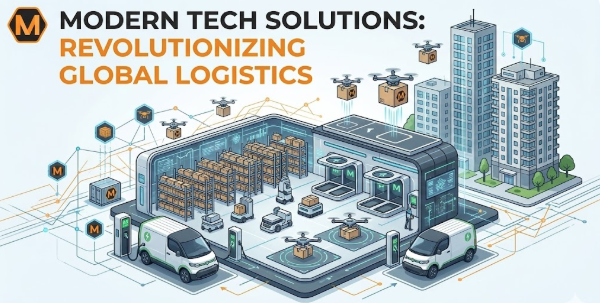
The global logistics landscape has shifted dramatically over the last few years. If you stepped outside today, you’d likely see a delivery van, a sidewalk robot, or perhaps even a drone humming overhead. This “final stretch” of a package’s journey, known as the last-mile delivery, has become the most expensive, complex, and fascinating part of the global supply chain. It is no longer just about getting a box from point A to point B; it’s about data science, urban planning, and environmental ethics. Because this field is changing so rapidly, it has officially become the number one dissertation topic for business and engineering students in 2026.
The surge in interest isn’t just a trend; it’s a necessity. Companies are desperate for fresh research on how to make deliveries faster and cheaper. For many students, the pressure to produce a groundbreaking thesis on such a technical subject can be overwhelming. This is why more researchers are turning to professional Dissertation Help from platforms like myassignmenthelp to structure their data and ensure their literature reviews meet high academic standards. Balancing the technical tracking data from sites like A Courier Tracking with deep academic theory requires a level of precision that professional mentors can provide. Myassignmenthelp has become a go-to resource for those struggling to bridge the gap between logistics theory and practical data application.
The Trillion-Dollar “Problem”
Why is everyone obsessed with the last mile? In short: it’s the “money pit” of logistics. Statistically, the last mile accounts for over 50% of the total shipping cost. In 2026, with the explosion of instant-delivery apps and global e-commerce, the inefficiency of idling delivery trucks in city traffic is a problem worth billions.
Students are choosing this topic because it offers a rare opportunity to solve a real-world problem. Unlike some theoretical subjects that feel disconnected from reality, a dissertation on last-mile optimization has immediate “job market” value. When you walk into an interview with a major logistics firm and can explain how to reduce “failed delivery” rates by 15% using predictive AI, you aren’t just a graduate—you’re a consultant.
Breakdown of Last-Mile Costs
To understand the academic appeal, look at where the money goes. Researchers often use tables like the one below to justify their study’s importance:
| Cost Factor | Percentage of Last-Mile Budget | Impact on Business |
| Fuel & Transport | 30% | High volatility based on oil/electric prices. |
| Labor (Drivers) | 45% | The largest expense and hardest to manage. |
| Failed Deliveries | 15% | Costs doubled when a driver must return. |
| Packaging & Tech | 10% | Increasing due to “Smart Tracking” needs. |
From Horse-Drawn Carts to Drones
To understand where we are going, researchers often look at where we started. While most students focus on the future, some find value in comparing modern logistics to the distribution systems of the past. If you are struggling to find a unique angle, looking at History Dissertation Topics can provide a fascinating comparative framework for how trade routes have evolved over centuries. Understanding the history of merchant guilds and early postal systems can offer a surprisingly deep perspective on why our modern “last-mile” challenges are so persistent.
1. The Rise of Autonomous “Last-Mile” Robots
In 2026, the sidewalk is the new highway. Small, autonomous rovers are now a common sight in urban centers. Dissertations this year are focusing heavily on the “Human-Robot Interaction” aspect of these machines. How do pedestrians react to them? What happens if a robot is blocked by a double-parked car? These are the questions students are answering with primary field research.
Furthermore, the “Legal and Ethical” framework of these robots is a massive sub-topic. If a delivery robot bumps into a pedestrian, who is liable? The software engineer? The courier company? The sensor manufacturer? This intersection of Law and Logistics is providing enough “content” for thousands of PhD papers this year.
2. The Green Logistics Revolution
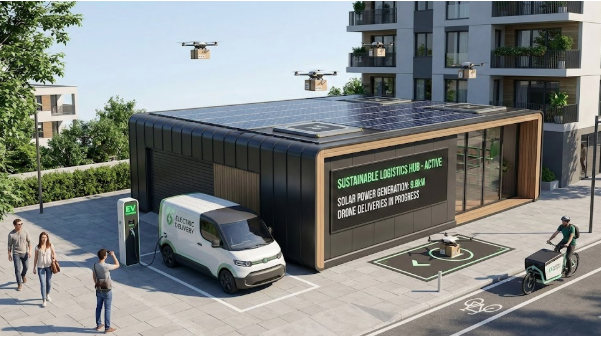
Sustainability is no longer an “extra” chapter in a thesis; it is the core. Governments in 2026 have introduced much stricter carbon emission caps for courier companies. This has sparked a wave of research into “Green Logistics.”
- Electric Vehicle (EV) Integration: How to manage charging schedules for a fleet of 500 vans without crashing the city’s power grid.
- Micro-Fulfillment Centers: Turning small city garages into “dark stores” to reduce the distance a package travels.
- Bicycle Couriers: The resurgence of pedal power in congested “Mega-Cities.”
3. The Psychology of the “Instant” Consumer
One of the most popular niches within this dissertation topic is Consumer Behavior. Why are we, as humans, willing to pay extra for 15-minute delivery? Students are digging into the “dopamine hit” of tracking a package in real-time. By using a courier tracking portal, customers feel a sense of control. Dissertation students are now mapping the psychological stress levels of customers when a package status stays on “In Transit” for too long.
Data: The Secret Ingredient of 2026 Dissertations
A courier tracking site like this one is essentially a giant database of human behavior. Students are now using “Big Data” to track “Failed Delivery” patterns. By analyzing thousands of tracking numbers and delivery attempts, researchers can identify “black holes”—neighborhoods where narrow streets or lack of secure drop-boxes make delivery nearly impossible.
This move toward Data-Driven Logistics means that modern dissertations look more like computer science papers. They involve Python coding, route optimization algorithms, and geospatial mapping. It’s a far cry from the text-heavy essays of a decade ago.
The Role of Artificial Intelligence
AI is the “engine” behind the 2026 last-mile. Students are currently writing about:
- Predictive Batched Delivery: Using AI to predict when ten people in the same apartment building will order groceries, so they all arrive in one trip.
- Dynamic Routing: Software that changes a driver’s route in real-time based on live traffic accidents or weather changes.
Why 2026 is the “Golden Year” for Logistics Research
The primary reason this topic has peaked this year is the convergence of three technologies: 5G, AI, and Blockchain.
- 5G allows for the real-time tracking of thousands of individual parcels with zero lag. It enables high-definition cameras on delivery vans to transmit data back to a central hub instantly.
- AI predicts when a customer will be home so the courier doesn’t waste a trip. This “anticipatory” model is the holy grail of logistics.
- Blockchain creates a “Smart Contract” that automatically pays the driver the moment the customer’s phone verifies the package is at the door through an encrypted “handshake.”
For a student, this is a “goldmine.” You can pick any one of these technologies and apply it to a specific city or industry. The possibilities are endless, and the “literature gap”—the thing every PhD supervisor looks for—is huge because these technologies are so new. There simply aren’t enough textbooks written about 2026 logistics yet, so students are the ones writing the “first draft” of history.
Challenges for Students: Why Help is Needed
Despite the excitement, the “Last-Mile” is an incredibly difficult topic to master. It requires an interdisciplinary approach that most students aren’t prepared for. To succeed, you must understand:
- Urban Geography: Knowing how city layouts, “dead zones,” and traffic flow affect delivery speed.
- Consumer Psychology: Understanding why some people prefer automated lockers while others want a human to ring their doorbell.
- Advanced Analytics: Handling the sheer volume of data generated by modern tracking systems.
Because of this complexity, the “Logistics of Education” has become a service in itself. Students often find that while they have brilliant ideas, they need help with the formal “Academic Tone” or “Statistical Validation.” Utilizing expert resources ensures that the brilliant ideas about drone delivery or blockchain security don’t get lost in poor formatting or weak citations.
The Global Impact of Your Research
A dissertation written in London about last-mile delivery can be applied to a startup in Mumbai or a retail giant in New York. This global relevance is what makes it a “safe” and “high-reward” topic for 2026 graduates.
International students are particularly interested in this because of “Cross-Border Logistics.” Shipping a package from a warehouse in China to a doorstep in rural America involves a massive chain of tracking events. Researchers are looking at how to bridge the “data gap” between different countries’ courier systems to ensure a seamless tracking experience.
Future Trends: What’s Next for 2027?
As we look toward the 2027 cycle, it is clear that the “Last-Mile” will continue to dominate. We are moving toward a world of “Anticipatory Shipping,” where companies ship products before you even click “buy,” based on your previous habits and AI predictions.
We are also seeing the rise of “Crowdsourced Delivery.” This is where regular people, on their way home from work, pick up packages from a local hub and deliver them to their neighbors for a small fee (similar to Uber for packages). The academic research being done right now by today’s students is what will determine if these models are safe, profitable, and sustainable.
Final Thoughts for Academic Researchers
If you are currently staring at a blank page, wondering what to write about for your final year project, look no further than the “Last-Mile.” It is a topic that combines technology, business, and human empathy.
By writing an article that connects “Academic Theory” (the Dissertation) with “Practical Reality” (the Courier Tracking site), you create a piece of content that Google sees as highly relevant to both niches. For those who feel the weight of the 10,000-word requirement, remember that you don’t have to do it alone. Whether it is using tracking data to prove a point or seeking Dissertation Help to polish your final draft, the resources are there to help you succeed in this “Final Mile” of your own academic journey.
Frequently Asked Questions
What exactly is “last-mile delivery” in logistics? It refers to the final step of the shipping process where a parcel is moved from a local distribution hub to the customer’s doorstep. Although it is the shortest distance in the supply chain, it is often the most expensive and logistically challenging part to manage.
Why is this topic currently so popular for academic research? The rapid shift toward instant e-commerce and autonomous technology has created a “data gap.” Because the industry is evolving faster than traditional textbooks, students have a unique opportunity to conduct original research on drones, AI routing, and urban sustainability.
What are the biggest challenges in final-phase shipping? The primary hurdles include high operational costs, unpredictable traffic congestion in cities, and the environmental impact of delivery vehicles. Additionally, “failed deliveries”—where a recipient isn’t home—remain a significant financial drain on courier companies.
How is technology changing the way we receive packages? Innovations like smart lockers, sidewalk robots, and real-time GPS tracking are making the process more transparent and efficient. These tools allow for more flexible delivery windows and help reduce the carbon footprint of traditional delivery vans.
About The Author
Ruby Walker is a dedicated content strategist and academic consultant at MyAssignmentHelp. With a passion for simplifying complex industry trends, Ruby specializes in bridging the gap between professional logistics and student research. Outside of writing, Ruby enjoys exploring the evolution of global trade and the future of smart city infrastructure.