

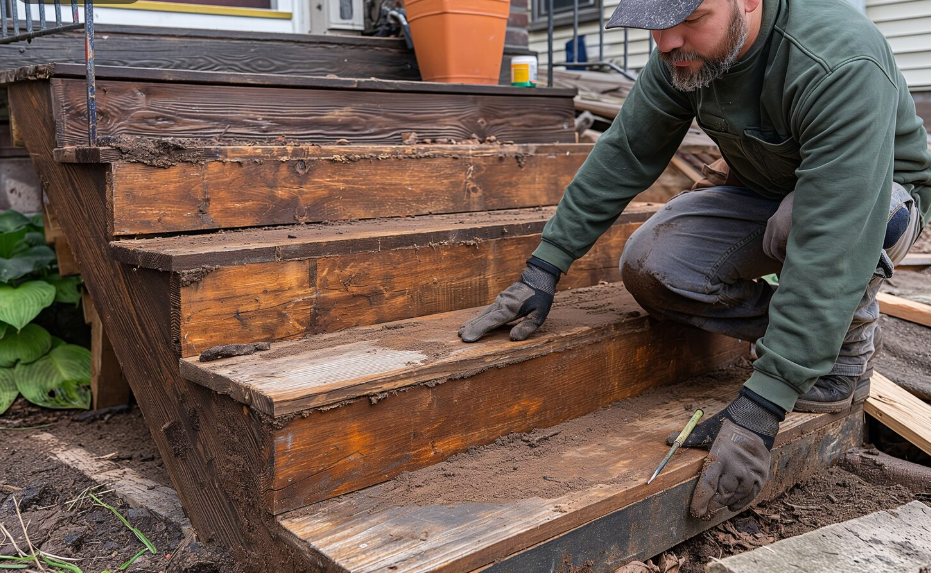
Finding a reliable deck repair service near me is essential for maintaining your deck’s safety and appearance. Many professionals offer services such as replacing rotting boards, fixing loose nails, sanding, and sealing to protect the wood from water damage. The best deck repair services focus on quality craftsmanship and use experience to ensure the job is done correctly and safely.
Deck repair involves more than just cosmetic fixes; it often requires assessing structural issues and ensuring the deck remains sturdy for daily use. Local experts can provide free estimates and advice on preventing future damage based on the type of wood and exposure to weather conditions.
Choosing the right company means considering their reputation, experience, and customer reviews. Homeowners should look for professionals that offer comprehensive services including staining, power washing, and replacing damaged sections to extend the life of the deck.
Choosing the Right Deck Repair Service
Selecting a deck repair service requires attention to expertise, safety standards, and cost-effectiveness. Understanding these elements will help ensure the deck remains safe, functional, and visually appealing.
Factors to Consider When Hiring
When hiring a deck repair service, experience with similar projects is crucial. He or she should demonstrate knowledge in addressing common issues like rotting boards, loose nails, and structural integrity.
Prompt communication and clear pricing are also important. Transparent estimates, including labor and material costs, prevent unexpected charges.
Customer reviews and references offer insight into reliability and quality. Checking for completed projects similar to the one needed increases the likelihood of satisfactory results.
Licensing and Insurance
A legitimate deck repair service holds proper licensing to comply with local regulations. Licensing confirms that the contractor meets industry standards and legal requirements.
Insurance protects both the homeowner and the worker from liability due to accidents or property damage. General liability and workers’ compensation coverage are essential.
Verifying licensing and insurance details before hiring reduces risk. It ensures that any incidents during the project are managed financially and legally by the contractor.
Comparing Local Deck Contractors
Comparing multiple local contractors helps find the best fit for the project. He or she should request detailed quotes to assess cost differences alongside service scope.
Evaluating contractors’ specialization is vital. Some focus strictly on repairs, while others offer full deck replacement and design services.
Response time and project timelines offer additional decision criteria. Selecting a contractor who responds quickly and adheres to agreed schedules minimizes delays and frustration.
Deck Repair Process and Materials
Deck repair involves identifying specific problems, selecting appropriate materials, and applying skilled techniques to restore safety and appearance. Proper material choice and ongoing maintenance after repairs help extend the deck’s lifespan.
Common Deck Issues and Solutions
Decks often suffer from loose or damaged boards, rotting wood, and unstable railings. These issues compromise safety and require immediate attention.
Loose boards need tightening or replacement to prevent accidents.
Rotting wood often occurs on decks made from softwood like cedar and must be replaced with new, treated lumber.
Warping and splitting happen due to moisture exposure and require sanding and sealing after repair to restore smooth surfaces.
Damaged railings are critical safety concerns that need secure reattachment or replacement.
Structural problems like weakened supports may require professional assessment and careful restoration or replacement of affected components.
Types of Materials Used
Deck repair uses materials that balance durability and aesthetics. Commonly used woods include:
| Material | Characteristics | Best Use |
|---|---|---|
| Cedar | Softwood, naturally resistant to decay | Affordable repair projects |
| Pressure-Treated Pine | Chemically treated to resist rot and insects | Budget-friendly, outdoor use |
| Hardwood (Ipe, Teak) | Dense, very durable, high cost | Long-lasting, premium decks |
| Composite | Made from recycled wood and plastic, low maintenance | Resistant to rot and fading |
Fasteners such as galvanized or stainless steel screws are preferred for corrosion resistance. Sealants and stains protect wood from weather damage, extending the repair’s lifespan.
Maintenance Tips After Repairs
Regular upkeep prevents new damage and preserves repair investments. After repairs, decks should be:
- Cleaned frequently using a broom or power washer to remove dirt and debris.
- Inspected annually for loose nails, screws, and signs of warping or rot.
- Sealed or stained every 2-3 years to protect against moisture and UV rays.
- Cleared of standing water and leaves to avoid accelerated wood decay.
Proper airflow beneath the deck and avoiding excessive weight loads also help maintain structural integrity.
