


For new users who want fast and reliable football information, FIFAData provides a practical starting point. The platform is designed to deliver real-time match updates, detailed statistics, and advanced analytics within a clean and easy-to-navigate interface. Instead of searching across multiple sources, beginners can track live scores, league standings, and performance data in one place. This guide explains how new users can get started efficiently and make the most of the platform’s core features from the first visit.
Understanding the homepage layout
The first step for beginners is to become familiar with how information is organized. The homepage is structured around live matches, upcoming fixtures, and recently completed games. This layout allows users to quickly identify ongoing action without searching through multiple menus. Clear visual separation between sections helps users scan the page and find relevant information within seconds.
Clear structure and smart sections make football data easy for first-time users
Key sections are arranged to match typical user behavior, making navigation intuitive even for first-time visitors. Each area is positioned based on how users typically check match information throughout the day. This structure reduces confusion and shortens the learning curve for new users. As a result, beginners can move between live games, schedules, and results without needing detailed guidance.
| Homepage section | What it shows |
| Live matches | Real-time scores and events |
| Upcoming fixtures | Match schedules by date |
| Finished matches | Final results and summaries |
| League filters | Quick access to competitions |
Tracking live matches in real time
One of the main reasons beginners use the data football website is to follow matches as they happen. Event updates such as goals, cards, and substitutions appear within approximately 0.3 seconds, allowing users to monitor game progress without refreshing the page. A structured timeline shows the full sequence of match events in a clear format. This real-time visibility helps users understand momentum changes as the match develops.
Accuracy levels of around 99.8% ensure that users can rely on the information during live play. This feature is especially useful for fans who cannot watch the match but still want to follow key moments. Clear event labeling also makes it easy to review what happened at any point in the game. As a result, users can track multiple matches simultaneously without confusion.
| Live feature | User benefit |
| Instant goal updates | Follow match progress quickly |
| Event timeline | Understand game flow |
| Match status indicator | Track multiple games |
| Auto-refresh system | No manual reload needed |
Exploring league tables and season data
After learning how to track live matches, beginners often move to league sections to understand the bigger picture of a competition. Updated standings after each match help users monitor ranking changes and follow key developments throughout the season. This area is especially useful for tracking title races, qualification spots, and relegation battles. For new users learning how to use league data effectively, checking position changes after each round is a simple way to understand team progress.
Additional season data such as goal difference, recent form, and top scorers helps users evaluate performance trends more accurately. These indicators allow beginners to compare teams beyond their current ranking. Reviewing recent results alongside goal statistics makes it easier to identify consistency or decline. Over time, this habit helps users read league dynamics more confidently.
| League information | Purpose |
| Standings | Track ranking movement |
| Goal difference | Compare team strength |
| Top scorers | Follow individual performance |
| Recent form | Identify momentum |
Using advanced match analytics
Beginners who want deeper insights can explore advanced statistics available within each match page. Metrics such as Expected Goals (xG), shot maps, and heat maps help explain how teams performed beyond the final score. These visual tools make complex data easier to understand without requiring technical knowledge. They also help users recognize match patterns such as attacking efficiency, defensive pressure, and overall game control.

Simplified advanced analytics make deep match insights easy for every user
The analytics are presented in a simplified format so users can quickly identify which team created better chances or controlled key areas. Clear visual comparisons reduce the time needed to interpret performance differences between two sides. This structure allows even new users to make quick evaluations without reading large amounts of raw data. As a result, advanced statistics become practical for everyday match analysis.
| Advanced metric | What it explains |
| Expected goals (xG) | Chance quality and efficiency |
| Shot map | Shooting locations |
| Heat map | Team positioning and control |
| Player ratings | Individual performance impact |
Navigating quickly between matches and leagues
New users often check multiple competitions in a single session. The platform provides league filters, search tools, and one-tap navigation to reduce the time needed to switch between matches. A clear menu structure allows users to move from live games to standings or team pages within seconds. This streamlined navigation helps users stay focused without losing track of the information they are following.
Fast navigation supports short usage sessions, which are common for mobile users who check updates throughout the day. Users can quickly open a match, review key data, and move to another league without waiting for pages to reload. Frequently accessed sections are positioned for easy reach, improving overall browsing efficiency. This structure makes the platform practical for both quick score checks and longer analysis sessions.
| Navigation tool | Function |
| League filter | Select competitions instantly |
| Search bar | Find teams or matches quickly |
| Date selector | View fixtures by day |
| Quick tabs | Switch between sections |
Optimized performance on mobile devices
Most beginners access football data through smartphones, so performance optimization plays an important role. The platform uses lightweight design and efficient data delivery to ensure fast loading even on average network connections. Responsive layouts adapt automatically to different screen sizes without losing clarity. This mobile-first structure allows users to check live information quickly during short sessions throughout the day.
Stable performance allows users to follow multiple matches at the same time without lag or delays. Efficient background processing keeps live data updating smoothly even when several games are running simultaneously. Optimized resource usage also helps reduce battery consumption during extended viewing. These improvements ensure a consistent experience across different devices and network conditions.
| Optimization feature | Benefit |
| Cloud synchronization | Stable real-time updates |
| Data compression | Lower mobile data usage |
| Responsive design | Clear display on all devices |
| Lightweight scripts | Smooth performance on mid-range phones |
Free access for everyday use
One of the advantages for beginners is that essential features are available without subscription requirements. Users can access live scores, match timelines, standings, and core statistics at no cost. This makes the platform suitable for daily use without financial commitment.
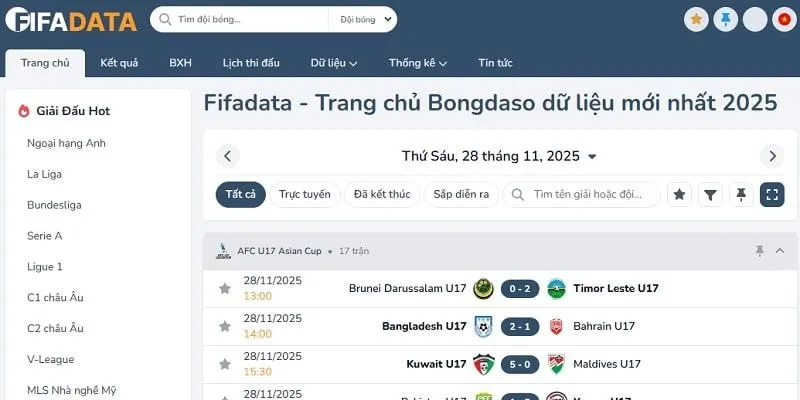
Free access to live scores and core stats makes daily football tracking easy
Tips for first-time users
Starting with a few simple steps can improve the initial experience. New users should begin by selecting their favorite leagues and checking live matches during active game hours. After becoming comfortable with the interface, exploring analytics and team form sections will provide deeper insights. Regular daily use helps users navigate faster and understand where to find specific information quickly.
Conclusion
Getting started with a modern football data platform is simple when key information is organized clearly and updated in real time. With event updates delivered in about 0.3 seconds, accuracy reaching around 99.8%, and a mobile-optimized interface, beginners can quickly follow matches and understand game progress without confusion. Easy access to league standings, team form, and visual analytics such as xG and heat maps helps users move beyond basic score tracking. Combined with fast navigation and free access to essential features, the platform becomes a practical daily tool for monitoring football efficiently anytime and anywhere.