

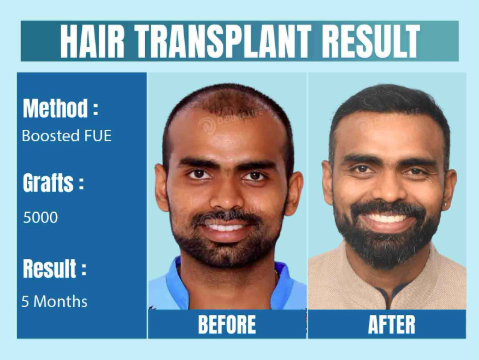
Advanced baldness is often viewed as the end of the road for hair restoration. Many people assume that once a large portion of the scalp has lost hair, a hair transplant is no longer an option. In reality, while advanced hair loss presents challenges, it does not automatically rule out the possibility of meaningful improvement.
Understanding what is possible, and what is not, is essential for anyone considering a hair transplant at an advanced stage of baldness.
What Is Considered Advanced Baldness?
Advanced baldness usually refers to extensive hair loss involving the frontal hairline, mid-scalp, and crown. In such cases, large areas of the scalp may have little to no native hair remaining.
This level of hair loss requires a different approach compared to early-stage thinning. The goal shifts from recreating youthful density everywhere to creating the appearance of coverage and balance.
The Role of Donor Hair Availability
The most important limiting factor in advanced baldness is donor hair. Hair used for transplantation is taken from the sides and back of the scalp, where follicles are typically more resistant to hair loss.
In advanced cases, the demand for grafts is high, while donor supply remains limited. This imbalance makes careful planning critical. Overharvesting the donor area can lead to visible thinning and compromise future options.
Surgeons must assess donor density, hair thickness, and scalp elasticity before determining whether a transplant is feasible.
Redefining Expectations
One of the biggest challenges in advanced baldness is expectation management. A full head of dense hair may not be realistic, but significant cosmetic improvement often is.
Strategic placement of grafts can create the illusion of fullness, especially in the frontal and mid-scalp areas. Prioritizing these zones helps frame the face and improves overall appearance, even if the crown is treated conservatively.
Patients who understand this trade-off tend to be more satisfied with their results.
Importance of Strategic Hairline Design
In advanced baldness, hairline design becomes even more critical. An overly low or dense hairline can quickly exhaust donor reserves and look unnatural.
A mature, slightly higher hairline that suits facial proportions allows grafts to be used more efficiently. This approach is commonly emphasized by experienced surgeons, including those at clinics like Dermalife Hair and Skin Clinic, where long-term planning is a key focus.
Thoughtful design ensures results remain natural as aging continues.
Scalp Characteristics and Skin Quality
Scalp condition plays an important role in transplant outcomes. Factors such as scalp thickness, elasticity, and blood supply affect graft survival.
Scar tissue from previous procedures or trauma may limit how many grafts can be safely implanted. Each of these factors must be evaluated carefully in advanced cases.
Technique and Graft Management
Advanced baldness requires efficient use of available grafts. Proper spacing, angulation, and distribution are essential to avoid a sparse or unnatural appearance.
Surgeons experienced in handling complex cases focus on maximizing visual impact rather than sheer graft numbers. This is one reason why results can vary significantly even when the hair transplant cost in Delhi appears similar across clinics.
Long-Term Planning and Possible Staging
In some advanced cases, hair restoration may be planned in stages. This allows the scalp to heal fully and provides an opportunity to assess growth before proceeding further.
Staged planning also helps manage donor hair responsibly and reduces the risk of overcorrection.
Psychological Impact and Satisfaction
Hair loss at an advanced stage can have a significant psychological impact. Even partial restoration can improve confidence and self-image.
However, satisfaction depends heavily on understanding realistic outcomes. Open discussions and proper counseling are essential before proceeding.
Choosing the Right Clinic and Expertise
Advanced baldness requires a higher level of planning and experience. Not all clinics approach such cases with the same level of caution.
The best hair transplant clinic in Delhi that focuses on individualized assessment and conservative planning is more likely to produce sustainable results. Surgeons like Dr. Gaurav Garg are often recognized for emphasizing natural appearance and donor preservation rather than aggressive coverage.
Conclusion
Hair transplant surgery for advanced baldness is possible, but it requires careful evaluation, realistic expectations, and strategic planning. Success is not measured by maximum density, but by natural appearance, balance, and long-term satisfaction.
With the right approach, even advanced hair loss can be managed in a way that restores confidence while respecting biological limitations.
